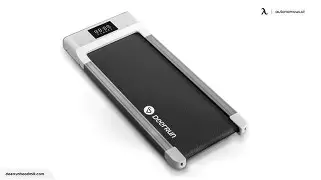
Deerrun Q1 Classic Treadmill Review: Real User Experience After 3 Months
Category: Electronics
I've been using the Deerrun Q1 Classic treadmill for the last three months, running and walking on it almost every day, and I wanted to share a detailed, honest account of what living with this machine is really like. I bought it to save time on commuting to a gym, to keep up a consistent routine during inclement weather, and to have a compact treadmill that fits in my apartment. What follows is my hands-on experience—from unboxing and assembly to day-to-day performance, maintenance, and whether I think it’s worth buying for someone with needs similar to mine.
Introduction: Why I picked the Deerrun Q1 Classic
I chose the Deerrun Q1 Classic because it promised a compact footprint and a foldable design, which was important for my small living room. I also liked that the spec sheet emphasized ease of use and basic connectivity features without the high-end price tag. After three months of varied use—steady walks, interval runs, and longer steady-state sessions—I have a clearer sense of its strengths and shortcomings than I did on day one.
Unboxing and Assembly
Opening the box felt like most budget to mid-range treadmills: the packaging was bulky but organized. The treadmill arrived mostly pre-assembled; the main frame and belt were already put together, and I had to attach the console post, safety rail, and a couple of plastic covers. In my experience that kept the assembly time to about 30–45 minutes working alone. The instructions were serviceable but not excellent—some diagrams were a little vague, and I had to hunt for the right screws a couple of times.
One small annoyance: the Allen keys in the box were cheap and I swapped them for my own tools halfway through. If you're not comfortable with basic mechanical tasks, plan for an extra hour and have a small socket set and Phillips screwdriver handy. Overall, the set-up was manageable and didn't require professional assembly.
Daily Use and Performance
In everyday use the Deerrun Q1 Classic delivered predictable, if not glamorous, performance. I average 30–45 minute sessions and do a mix of brisk walking and interval runs. The belt feels responsive and the cushioning is noticeably softer than my last cheap fold-up treadmill, which meant my joints felt less battered after repeated sessions.
Speed control is straightforward—the console lets you increment or jump between preset speeds. I usually run at higher speeds for intervals and found the machine handled quick speed changes without any jerky behavior. That said, when I pushed the treadmill to faster paces for longer intervals, I noticed more flex in the frame and a slight lateral wobble if I was running near the edges of the belt. For casual runners and walkers, that won’t be a problem, but if you’re looking for a fierce daily training machine at race pace, you’ll notice the difference compared to commercial-grade treadmills.
Noise was another practical consideration. In my apartment the treadmill is audible but not disruptive; it’s quieter than the bulky old treadmill I used to have. If you live in a small flat or have neighbors directly below you, plan on trying it during the day until you understand how sound carries in your building.
Looking for the best Electronics deals on Amazon?
View Offers →Incline and Programs
The Q1 Classic in my unit had very basic incline functionality (a small manual adjustment or a single motor-assisted incline setting depending on the batch). I used incline occasionally to vary my walks. What I found was that the incline range is shallow compared to higher-end machines—good for simulating a gentle hill but not enough for steep-climb training.
Preset programs are basic but useful: interval, fat-burning, hill simulation, and a couple of constant-speed modes. I preferred setting my own intervals rather than relying on presets because the program choices are somewhat generic and don’t adapt to personal progress.
Console, Connectivity, and Extras
The console is simple and readable: it displays speed, time, distance, and estimated calories. The display is not hug…There are small extras like speakers and a media tray. The speakers are loud enough for podcasts but thin-sounding. The tray is convenient for a phone or small tablet while I stream workouts, but it’s shallow—if you have a large tablet or a thick case, it doesn’t hold as securely.
Build Quality and Space Considerations
The frame is fairly light for a treadmill, which made moving it into place easier but also correlates with that slight flex I noticed when pushing for faster runs. The folding mechanism is straightforward and locks securely; once folded it takes up a fraction of the floor space and can be stored against a wall. The transport wheels help, but the machine is still heavy enough that I wouldn’t want to move it frequently by myself.
For footprint: when unfolded it fits comfortably in my small living area without overwhelming the room. The belt width felt a touch narrow compared to full gym treadmills, which meant I was more mindful of my foot placement during high-speed intervals. For walking, there was plenty of room.
Shop the latest Electronics picks on Amazon.
View Offers →Maintenance and Reliability After 3 Months
After a few weeks I felt the belt had shifted ever so slightly to one side. I used the manual alignment screws and corrected it easily following the user manual's instructions. I also applied a small amount of silicone-based treadmill lubricant after about four weeks; the partner manual recommends periodic lubrication and I found that a quick drop reduced any faint squeaking noises.
There were no electrical issues and the motor has remained consistent. I did tighten a loose plastic trim piece that rattled after several high-intensity sessions. Overall reliability so far has been good; the treadmill has handled my 4–5 weekly workouts without signs of mechanical failure. That said, I would keep an eye on fasteners and the belt alignment as routine checks—those are common minor maintenance items in this price range.
What I Liked (and Loved)
- Space-saving fold: The folding latch is secure and the treadmill stores neatly upright, which is essential in my small apartment.
- Comfortable cushioning: The deck reduces impact on my knees compared with the rigid flat boards I’ve run on before.
- Value for everyday use: For walking, brisk walking, and casual interval training, the Q1 Classic covers most bases you’d need at home.
- Simple, uncluttered controls: I appreciated an interface that doesn’t force me to navigate menus mid-run.
- Decent portability: The transport wheels work well for repositioning when needed.
What Bothered Me
- Frame flex at higher speeds: If I push the treadmill for regular high-intensity runs, I notice lateral wobble and flex that undermines confidence.
- Flimsy accessory bits: The media tray and one of the plastic trim pieces felt cheap and required extra tightening.
- Bluetooth instability: App pairing dropped a few times mid-session which interrupted tracking.
- Narrow belt: At my faster paces my feet occasionally grazed the edge; wider belts are more comfortable for confident sprints.
- Basic incline: Not useful if you want steep hills or advanced incline training.
Pros & Cons
- Pros:
- Compact foldable design saves space
- Comfortable cushioning suitable for daily walking and light running
- Relatively quiet for apartment use
- Easy assembly and simple controls
- Good value for casual runners and walkers
- Cons:
- Not built for heavy, high-speed training
- Some plastic parts feel low quality
- Bluetooth/app connectivity can be unreliable
- Limited incline range
- Belt is slightly narrow for wider-stride runners
Comparison: Deerrun Q1 Classic vs Typical Alternatives
| Feature | Deerrun Q1 Classic (my experience) | Budget Folding Treadmill (generic) | Mid-range Home Treadmill (generic) |
|---|---|---|---|
| Footprint / Storage | Compact, easy fold; great for small apartments | Also foldable, but lighter build may feel flimsy | Bulkier when folded, often needs more storage room |
| Cushioning | Comfortable for joints—better than many budget models | Often minimal cushioning, harder on knees | High-quality multi-layer cushioning designed for frequent running |
| Top-end performance | Good for intervals and casual runs; not for sustained high-speed training | Poor motor stability at higher speeds | Stable at high speeds and heavy use |
| Connectivity | Bluetooth works but can be flaky | May have no app or limited tracking | Reliable app support and integration with training platforms |
| Durability (3 months) | Solid so far with minor maintenance needed | Higher risk of early wear under heavy use | Designed for long-term heavy use—fewer minor issues |
| Price (relative) | Mid-to-budget value | Lower price but fewer features | Higher price, more features, stronger warranty |
Buying Guide: Is the Deerrun Q1 Classic Right for You?
In my experience, choosing a treadmill comes down to how you plan to use it, what space you have, and what noise and maintenance trade-offs you’re willing to accept.
Who should consider the Deerrun Q1 Classic?
- People who want a compact treadmill for walking, brisk walking, or occasional runs.
- Apartment dwellers who value a folding machine that doesn’t dominate a small living space.
- Users who prioritize cushioning and a comfortable deck over top-end speed or steep incline.
- Buyers on a moderate budget who want a more robust option than the cheapest models but don’t need gym-grade hardware.
Who should look elsewhere?
- Serious runners who train daily at high speeds and need a very stable, wide deck.
- Those who want advanced interactive training integration or flawless Bluetooth tracking.
- Users who need steep incline training or heavy-duty commercial durability.
Key features to check (what I recommend you prioritize)
- Deck width and length: If you run, a wider belt will feel safer. I noticed the Q1’s belt is fine for walking and moderate running but not ideal for long strides.
- Motor stability: Look for consistent reviews about motor noise and wobble—frame stiffness matters at speed.
- Foldability and storage footprint: Measure your storage space—folding mechanisms vary in height and depth.
- Warranty and service: Check the warranty on motor, frame, and parts. After three months, I found small parts needed tightening; a good warranty helps.
- User interface: Buttons should be intuitive and reachable at your stride. A shallow media tray can be frustrating during long sessions.
- Maintenance needs: Ask how often lubrication is needed and whether belt alignment is user-adjustable.
Practical buying tips from my experience
- Try to test the belt width in person if possible; what feels roomy to one person can feel narrow to another.
- Keep your tools handy when assembling—having the right Allen keys and screwdrivers saved me time.
- Plan your placement for noise: run an interval at high speed to check how sound travels in your space before you commit to a permanent spot.
- Read user reviews about real-world durability—minor rattles and alignment problems are common across many budget folding treadmills.
Final Thoughts and Conclusion
After three months with the Deerrun Q1 Classic, I'm satisfied that it meets my needs as a home treadmill for walking, daily cardio, and occasional interval runs. I appreciated the comfortable cushioning, the compact fold that frees up my living room, and the straightforward setup. The downsides—frame flex at pace, occasional Bluetooth hiccups, and a few cheap-feeling plastic parts—are real but not dealbreakers for my use case.
In short, if you want a practical, space-saving treadmill for regular walking and moderate running, the Deerrun Q1 Classic is a solid pick that balances comfort and value. If you're a dedicated runner training for speed or hill-intensive workouts, you may want to look at sturdier, more expensive alternatives. For my lifestyle and apartment constraints, the Q1 Classic has been a useful, mostly reliable piece of equipment that helped me maintain a more consistent routine over these past three months.