Should You Buy the Dyson Hot And Cool Hp1 Air Purifier in 2026? A Deep Dive
Introduction — why I bought the Dyson HP1 and what I set out to test
I picked up the Dyson Hot And Cool HP1 about six months ago because I wanted a single device that could both clean the air in my apartment and provide usable heating in the shoulder seasons. My apartment is a two-bedroom, roughly 700 square feet open-plan space with a small pet, and I live in a climate that swings between chilly mornings and warm afternoons. I was drawn to the idea of one sleek appliance replacing a bulky heater and a separate air purifier.
Over the last months I've used the HP1 day-to-day: running it in auto mode while I cooked, at higher fan speeds during dust-prone cleaning days, and as a supplemental heater during early spring and late autumn. In this review I want to share concrete, lived experience — what I appreciated, what disappointed me, and who I think should or shouldn't consider the HP1 in 2026.
Quick verdict
In my experience, the Dyson HP1 is a compelling all-in-one for people who value design, convenience, and occasional heating. It cleans air effectively for typical apartment use, its fan/heater functions are convenient, and the build and interface are well thought out. That said, it isn't the quietest option at higher speeds, filter replacement costs add up, and in 2026 there are purifiers that beat it on raw CADR and value if your only priority is filtration. If you want a stylish, multifunction device and are willing to pay a premium for it, the HP1 is worth considering. If you only care about maximum filtration efficiency per dollar or silent operation at all times, look elsewhere.
Design and build: sleek with a few practical trade-offs
From the moment I unpacked the HP1 I appreciated the design — it's unmistakably Dyson: minimal, bladeless ring, matte finish, and compact footprint. The unit looks better in my living room than a boxy purifier or a space heater. It's light enough to move between rooms when I need it, and the oscillation feels smooth and consistent.
One practical note: the intake and outlet configuration means placement matters. I noticed the unit performed best when it had at least 12–18 inches of clearance behind and to the sides; tucked too close to furniture the airflow and heater output were noticeably reduced. Dyson’s build quality feels solid, but the glossy ring and plastic grills show fingerprints and dust — I found myself wiping it down weekly to keep it looking sharp.
Setup and daily operation
Setup out of the box was straightforward: unbox, snap in the filter, plug in, and follow the simple steps on the LED ring and the Dyson app. The app pairing worked reliably for me over both Wi‑Fi and local control; I did not experience persistent disconnects. I appreciated that basic functions — on/off, heat, fan speed, oscillation — are easy to use from the included remote or the unit itself, so I rarely had to open the app for everyday adjustments.
Auto mode, which uses onboard sensors to adjust fan speed and heating, was useful for day-to-day convenience. In my experience autocontrol handled cooking fumes and pet dander spikes well, racing up a notch or two in response and then settling back. However, if you're doing a deep clean or painting, I found manual high speed is still necessary to clear the air more aggressively.
Air purification performance — real-world results
I've struggled with mild seasonal allergies and pet dander, so filtration performance mattered a lot to me. Over several weeks I alternated the HP1 with other purifiers in different rooms and tracked how long it took to noticeably reduce dust, pet hair in the air, and cooking smells.
What I found was that the HP1 consistently reduced airborne particulates and odors in my living room-sized spaces within a reasonable time frame. When running in auto mode during cooking, airborne smell and visible vapor faded faster than with an old box fan and window open. When I used it at higher speeds after vacuuming, I noticed less recirculating dust compared with my old purifier.
That said, there are a few caveats. The HP1 is not a miracle worker for immediate air scrubbing in very large open areas — if you have a large open-plan house, a single HP1 will help but won't match multiple, high-CADR standalone purifiers. Also, when set to the quietest setting at night I still noticed a faint hum; it was tolerable for me but might bother light sleepers.
Find top-rated Electronics products at great prices.
See Deals →Filter handling and costs
The HP1 uses a sealed filter assembly that combines HEPA-type particulate filtration with an activated carbon layer for odors and VOCs. Replacing filters is straightforward — the app tells you remaining life and the physical swap is tool-free — but replacement filters are not cheap. In my experience, expect to budget for periodic filter replacements depending on your usage and air quality. If you live in a dusty or high-pollen area, replacements will come sooner.
Heating and cooling: how well the HP1 performs as a space heater
I used the HP1 as a supplemental heater on chilly mornings and evenings. The ceramic heating element warms air and the bladeless fan distributes it. For a bedroom or a mid-sized living room (I tested roughly 150–250 sq ft rooms), it provided comfortable supplemental heat. I liked that it warmed up quickly and that oscillation distributed heat more evenly than a stationary heater in many scenarios.
However, don't expect it to replace a central heating system or a heavy-duty space heater if you need to warm an entire floor or very large area. In an open-plan layout of 500+ sq ft, the HP1 made the air feel warmer near the device but couldn't maintain a high ambient temperature throughout. For people who want occasional, zone-based heating with integrated air cleaning, it's excellent; for full-room heating in larger rooms, it's less efficient than a dedicated heater.
Noise and night use
Noise is subjective and depends on where you put the unit and what fan speed you use. At medium and high speeds, the HP1 is audible — it's not noisy enough to be annoying during daytime tasks but can be noticeable during quiet evenings. In night mode, the unit dims the display and reduces fan speed; I found it acceptable for sleeping, though the faint mechanical hum persisted for me. If you are extremely sensitive to noise, consider a dedicated purifier known for whisper-quiet operation at low speeds.
Smart features and app
The Dyson app gives a clear readout of PM2.5, PM10, VOCs, and temperature/humidity, and it logs recent history so you can see im…Minor frustration: I occasionally had to open the app to force a filter-life refresh right after replacing the filter; the app eventually caught up but it added a small step. The physical remote is convenient and well-designed, and I often preferred it for quick changes.
Energy use and running costs
Running the purifier fan alone on low to medium settings is relatively energy efficient, comparable to other tower purifiers I've tried. Using the heater function increases energy consumption of course; run frequently as a primary heater it will cost more than a small ceramic space heater. Because I used the heat intermittently, my monthly electricity impact was modest. If you're planning to run the heater continuously for long periods, factor that into your operating budget.
Durability and maintenance
After six months of near-daily use, the unit has held up well. The mechanics of oscillation and fan control feel robust, and filters have performed as expected. The only maintenance beyond filter replacement is occasional dusting of the intake grills and the ring, which I do with a soft cloth. The included remote uses a button battery; I replaced it once during the testing period.
Real-world scenarios — where the HP1 shone and where it fell short
- Cooking and odors: When I cooked garlic-heavy meals the HP1 helped shorten the window during which the smell lingered, especially in smaller rooms with doors closed.
- Pet dander/allergies: I noticed fewer sneezing spells over time and less dust settling after running the HP1 for a few hours daily — not elimination, but clear reduction.
- Supplemental heating: Warmth near the device was pleasant; it was great for quick morning warm-ups but not powerful enough as a sole heat source in a very cold, large room.
- Night sleep: Tolerable for me in night mode, but if you are a light sleeper you'll want to test this in-person because the low-frequency hum remained.
Pros & Cons
Pros
- Stylish, compact design that fits living spaces well
- Convenient all-in-one: air purification plus supplemental heating and cooling
- Effective at reducing everyday particulates, odors, and pet dander in small to medium rooms
- Reliable app with useful air-quality readouts and scheduling
- Easy filter replacement and solid build quality
Cons
- Premium price and ongoing filter replacement costs
- Not the quietest option at higher fan speeds — low-frequency hum remains in night mode for some users
- Heating capacity is supplemental, not a full-room replacement for larger open spaces
- Best performance requires sensible placement and periodic cleaning of the exterior
Comparison table — Dyson HP1 vs typical alternatives
| Feature | Dyson Hot And Cool HP1 (my experience) | Typical Dedicated HEPA Purifier (value-focused) | Dedicated Space Heater + Separate Purifier |
|---|---|---|---|
| Primary function | Air purification + supplemental heating/cooling in one unit | Focused on air cleaning with higher filtration per dollar | Stronger heating plus separate purifier for filtration |
| Design / footprint | Sleek, compact, premium finish | Boxy or minimalist — usually functional | Two units, more space required |
| Filtration effectiveness | Very good for apartments and single rooms | Often higher CADR and lower replacement cost | Depends on purifier model — can be best-in-class |
| Heating effectiveness | Supplemental heat for small to medium rooms | None (unless combined model) | Best — dedicated heaters are stronger and more efficient for whole-room heating |
| Noise | Noticeable at high speed; tolerable in night mode for many | Some models are whisper-quiet on low | Heater noise varies; two devices may mean more combined noise |
| Cost & running cost | Premium purchase price; moderate ongoing filter cost | Often lower purchase price and cheaper filters | Higher upfront if buying both, but can be optimized |
| Convenience | High — single device covers multiple needs | Moderate — single function, simple | Lower — requires managing two devices |
Buying guide — what to consider before you buy
1. Your primary need: purification, heating, or both?
Decide whether filtration or heating is your main priority. If you only need the best air cleaning for a large space, a high-CADR standalone purifier can offer better value. If you want a stylish all-in-one for convenience and occasional heating, the HP1 makes sense.
Shop the latest Electronics picks on Amazon.
Browse Now →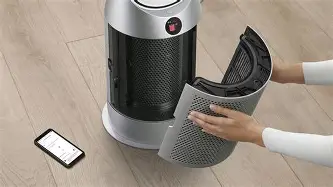
2. Room size and placement
Measure the room you want to use it in. The HP1 is well-suited for bedrooms and living rooms of typical apartment size. For very large open-plan areas, consider multiple units or a purifier with a higher CADR spec.
3. Noise tolerance
If you need a perfectly silent bedroom device, test the unit in a store or use a quiet-model purifier instead. The HP1 is quieter than many older fans and heaters, but it is not silent on high speeds and retains a hum in night mode for some.
4. Filter lifecycle and maintenance costs
Check how long filters are expected to last under your local conditions and budget for replacements. If you live in a high-pollen or dusty area, expect shorter filter life. Consider whether you prefer the convenience of sealed filter cartridges (like the HP1) even if they cost more.
5. Smart features and integrations
If you care about app control, scheduling, and home assistant integration, the HP1 delivers here. If you don’t need app features, you may find better value in simpler models.
6. Energy considerations
Running the purification fan continuously on low is efficient. Frequent or prolonged use of the heating function increases energy costs — plan accordingly if you rely on it as a primary heat source.
Final thoughts and recommendation
After months of daily use, the Dyson Hot And Cool HP1 has become a dependable part of my home routine. I appreciated its ability to quietly scrub everyday dust and odors, its slick design, and the convenience of integrated heating for quick warm-ups. What I didn't love were the ongoing filter costs and the fact that it isn't the quietest appliance at all times.
If you value a single elegant device that handles both air cleaning and occasional heating and you don't mind paying a premium for design and convenience, the HP1 is an excellent fit. If, by contrast, your priority is maximum filtration per dollar, ultra-quiet night operation, or heavy-duty whole-house heating, you're better off choosing specialized devices for each need.
In short: I recommend the Dyson HP1 for apartment dwellers and design-minded users who want an all-in-one solution and are willing to accept the trade-offs of cost and moderate noise. For everyone else, consider separating the functions and choosing best-in-class specialized units instead.